The Ancient Magic Behind St. Patrick’s Day Symbols

Every year on March 17th, the world turns green. Shamrocks appear everywhere, Celtic knots decorate everything from jewellery to beer mugs, and suddenly everyone seems a little more Irish than usual. But behind the modern celebration is something far older and far more mystical.
Many of the symbols we associate with St. Patrick’s Day didn’t actually start with St. Patrick at all.
Long before Christianity arrived in Ireland, the island was home to a rich spiritual tradition filled with nature symbolism, sacred numbers, and powerful myths. Some of those ancient ideas quietly survived and still show up in the symbols we use today.
Let’s take a little walk back through time and uncover the old magic hiding in plain sight.
☘️ The Shamrock: More Than Just Good Luck
The shamrock is probably the most recognizable symbol of St. Patrick’s Day. According to popular legend, St. Patrick used the three leaves of the plant to explain the Christian concept of the Holy Trinity.
But the number three was already incredibly sacred in ancient Celtic culture long before St. Patrick ever stepped onto Irish soil.
Celtic mythology is full of triple symbolism.
There were triple goddesses, triple aspects of nature, and countless spiritual ideas expressed in groups of three. The number represented balance, harmony, and the interconnected nature of life.

So while the shamrock became a Christian teaching tool, it likely resonated so strongly because it already matched the spiritual language of the people who lived there.
In other words, the shamrock was already magical.
So when people occasionally stumbled across a four-leaf clover, it stood out as something rare and unusual — almost like nature had added an unexpected extra blessing. In Irish folklore, rarity itself was often seen as a sign of magic or favour from the unseen world.
 Finding a four-leaf clover became a small moment of wonder, a little nod from the universe that something special had crossed your path. Over time, that rarity and sense of surprise turned the four-leaf clover into a symbol of luck — not because it replaced the meaning of the shamrock, but because it was the delightful exception to it.
🔮 The Power of Three in Celtic Myth
If you start looking for the number three in Celtic culture, you’ll see it everywhere.
Three realms: land, sea, and sky.
Three stages of life: youth, adulthood, and elderhood.
Three aspects of many deities: maiden, mother, and crone.

The ancient Celts believed that the universe worked through cycles and balance. The number three symbolized completeness and spiritual harmony.
 This is why so many Irish symbols come in triads. It wasn’t just artistic style. It was philosophy carved into stone.
🌀 The Spiral: Ireland’s Oldest Symbol of Life
Long before Celtic knots became famous, spirals dominated ancient Irish art.
You can still see them carved into the stones at Newgrange, a prehistoric monument older than the pyramids of Egypt. These swirling designs date back more than 5,000 years.

The spiral symbolized cycles: life, death, rebirth, and the turning of the seasons. It represented movement and transformation, the idea that life was always evolving rather than ending.
In many ways, the spiral is the ultimate symbol of ancient Celtic thinking: everything is connected, and nothing truly stands still.
🧩 Celtic Knots: Infinity in Art Form
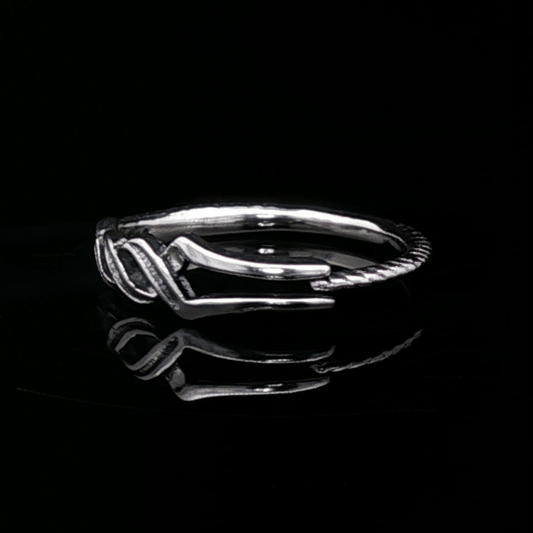
Celtic knotwork is one of the most recognizable artistic styles in the world. Those looping patterns that seem to weave endlessly through themselves have fascinated people for centuries.
What makes them so powerful is their lack of beginning or end.
 These designs symbolize eternity, continuity, and the endless cycles of existence. They reflect the Celtic worldview that life, spirit, and nature are all woven together in a great cosmic pattern.
It’s a surprisingly poetic way to think about the universe.
And yes — it also looks fantastic on jewellery.
🐍 The “Snakes” of St. Patrick’s Legend
One of the most famous stories about St. Patrick is that he drove all the snakes out of Ireland.
There’s just one problem.
Ireland never actually had snakes.
Most historians believe the story is symbolic. In many ancient cultures, serpents represented older pagan religions and spiritual traditions. The story likely reflects the shift from Ireland’s old belief systems toward Christianity.

But serpents in Celtic mythology weren’t evil creatures. They were often associated with wisdom, transformation, and the power of the earth.
So depending on how you read the story, the “snakes” might have represented something far deeper than reptiles.
🌿 Nature Was Sacred in Ancient Ireland
Before churches and cathedrals, the natural world itself was considered sacred.
Rivers, hills, forests, and stones were all believed to carry spiritual significance. The landscape wasn’t just scenery — it was alive with meaning.
 This deep connection to nature explains why so many Irish symbols are tied to plants, animals, and natural patterns.
Even today, Ireland’s mythology feels rooted in the land itself. It’s a place where the old stories still seem to linger in the hills and fields.
✨ Why These Symbols Still Feel Magical
Part of the reason these symbols have lasted so long is that they tap into universal ideas.
Cycles. Balance. Connection. Transformation.
These are themes that resonate across cultures and centuries. The ancient Celts simply expressed them through beautiful art and mythology.
So when we see a shamrock, a spiral, or a Celtic knot today, we’re not just looking at decoration. We’re looking at echoes of a worldview that saw the universe as interconnected, mysterious, and alive with magic.
☘️ A Little Ancient Magic on St. Patrick’s Day

St. Patrick’s Day may be famous for parades and celebrations now, but beneath all that modern fun are symbols that have carried meaning for thousands of years.
The shamrock, the spiral, the knot — they all connect us back to Ireland’s deep mythological past.
And honestly, that might be the most magical part of the holiday.
Thanks for reading,